
The Changing Fate of the House
The Glass RoomThis flow follows the building’s successive transformations from modern home to confiscated institution, wartime shelter, and public heritage site.
increasing Bearing strength in each event
 decreasing
Bearing strength in each eventdecreasingA Private Vision
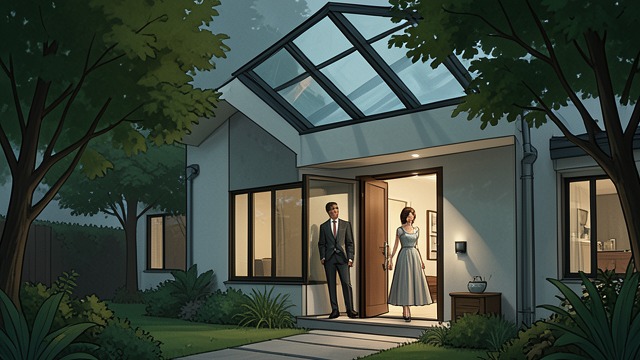
A Home Designed as Art
Collaboration
Viktor and Liesel commission Rainer von Abt to make a house that will reject inherited forms. The resulting plan brings the garden, city view, and indoor living space into a single composition.
The design makes the building a statement about the family’s hopes for a modern, cosmopolitan life.
Domestic promise
The Glass Room is meant to be lived in, not merely admired. Its openness is tested and given meaning by family routines, visitors, music, and children at play.
Confiscation and Conversion
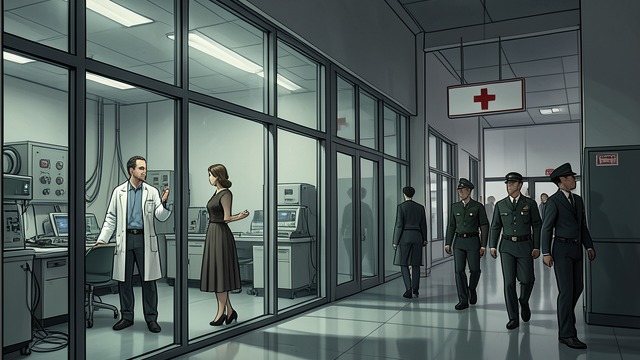
A Home Reassigned
Property becomes policy
The authorities take the house from the Landauers and install a biometric research centre. The conversion reflects the wider seizure of Jewish property and the state’s effort to classify people by supposed racial traits.
The building’s original design is appropriated for a purpose its owners could not have imagined.
A bitter continuity
The laboratory’s equipment fills the same space that once held family life and charitable recitals. The house remains materially recognizable even as its moral meaning is violently changed.
Laník Keeps the Place
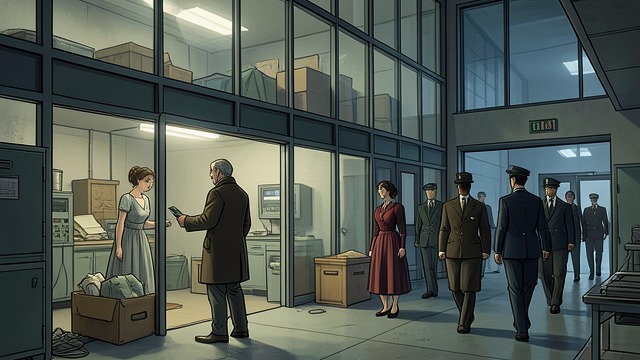
Caretaking and Appropriation
Survival in the building
After the research centre closes, Laník remains at the house and adapts its basement to wartime scarcity. He hoards goods and trades them to survive as the city’s ordinary systems break down.
He treats the house less as an architectural masterpiece than as a valuable place that gives him shelter and leverage.
A contested inheritance
Laník’s presence blurs the line between caretaker and appropriator. He maintains the building while also selling furniture and reshaping its rooms around his own needs.
Laboratory of Racial Science
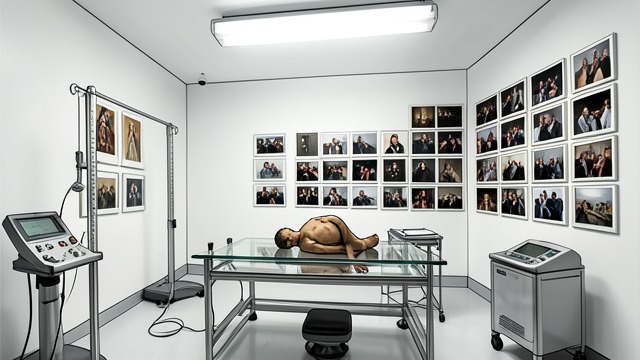
The Room as Instrument
Measurement
The centre uses forms, scales, callipers, blood tests, and photographs to turn human subjects into records. Its operators present the procedures as neutral science even as they support a racial hierarchy.
The Glass Room’s bright order becomes a theatrical setting for coercion disguised as method.
The house’s reversal
The building that was imagined as a space for unconstrained living is now used to impose categories on bodies. Its apparent transparency exposes people to scrutiny without making power itself transparent.
From Clinic to Museum
A Place Reinterpreted
Living use
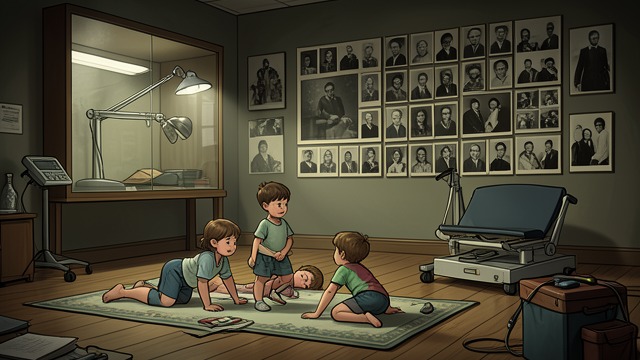
Under communist rule, the house becomes a children’s physiotherapy gym. Tomáš and Zdenka use its open floor for treatment and dance, making it a working space rather than a preserved exhibit.
The building’s history is largely unknown to those who inhabit it, though its design continues to shape their experience.
Heritage and return
A heritage campaign reintroduces the Landauers’ story, and Liesel eventually returns to the house. By 1990, it is presented as architecture and memorial, though no restoration can restore the life once lived there.
The late 1920s
After the German occupation of Město
During the war years in Město
During the Nazi occupation
From the postwar period to 1990
